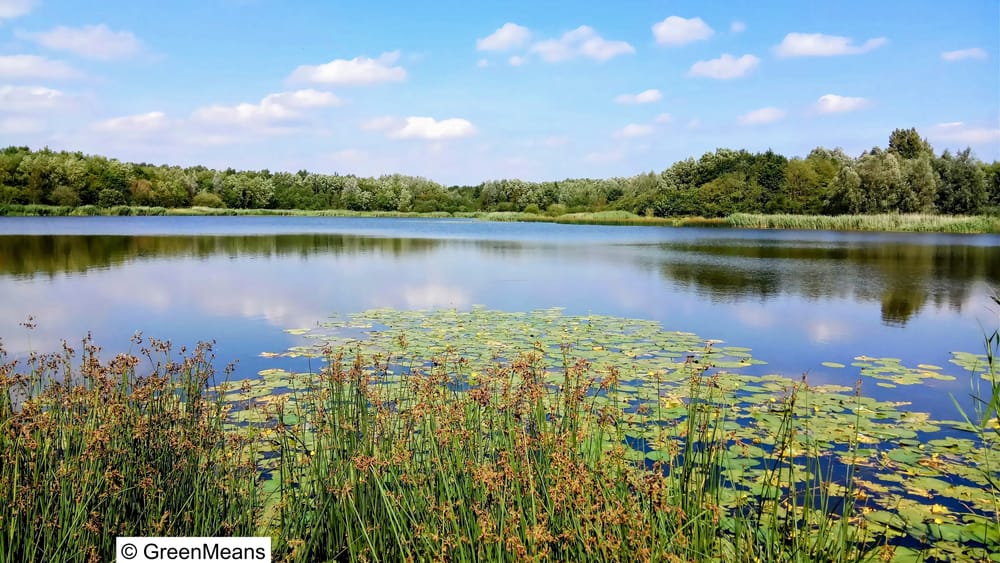
Most seed-saving advice tells you to choose the biggest fruit or the strongest plant. But if your goal is a garden that grows more resilient with every passing year, the plant worth saving from is the one that set seed when everything went wrong. Here's why the logic of resilience selection matters.
Social media algorithms quietly decide whose content gets seen and whose disappears. This guide explains how they work, what causes shadowbanning, and how to build a lasting, resilient digital presence.
From the closure of Britain's last coal plant to beavers returning to English rivers and white-tailed eagles raising chicks for the first time in 240 years, there is genuine environmental progress worth understanding.
All bat species in England and Wales are protected by law. This article explains what those protections cover, why they were introduced, and what they mean in practice for roosts, development, and conservation.
When a misleading claim crosses your feed, reacting fast is rarely the right move. This guide covers how to pause, use reliable UK fact-checking resources, and respond with evidence, walking through three widely shared claims as worked examples.
Hope is not a passive feeling. It is built through relationships, collective action, and the steady accumulation of community knowledge. This article explores what the evidence tells us about how ordinary people change things, and where to start.
Why does it matter who owns the railways, water pipes, and energy grid? This article examines the case for public ownership, exploring what decades of privatisation have produced, what different ownership models look like, and why accountability matters as much as economics.
Beneath every healthy forest lies a fungal network that connects trees, moves nutrients, and shapes how woodland survives. Understanding it changes what conservation means in practice.
The claim that the monarchy is essential for British tourism is often repeated, but does the evidence support it? This article examines the numbers, explores international comparisons, and asks whether Britain's historic attractions would remain popular regardless of its constitutional system.
Many countries have abandoned wealth taxes, citing complexity, avoidance, and low revenues. This article explores why those systems struggled, examines the Green Party's wealth tax proposal, and considers whether a targeted British model could avoid past pitfalls.
England and Wales are facing a biodiversity crisis that affects wildlife, communities, and the systems we rely on. Discover why nature recovery matters, what is driving biodiversity loss, and how we can build public support for protecting and restoring the natural world.
As Makerfield prepares for its 2026 by-election, voters face choices beyond a single parliamentary seat. Explore the rise of alternative politics, why some are looking beyond traditional parties, and how the Green Party presents a different vision centred on sustainability and long-term thinking.
Plants are the foundation of life on land. From producing oxygen and supporting food chains to regulating climate and sustaining biodiversity, their influence reaches every corner of our world. Discover how plants transformed Earth and why protecting them remains essential for a sustainable future.
Living costs in England and Wales are shaped by wider systems like energy markets and infrastructure. Reducing everyday costs requires smart structural choices, improving housing efficiency, reducing food waste, and altering transport habits to build resilience and cut resource use.
Sustainability requires social justice. In Pride Month, GreenMeans explores the structural history of LGBTQ+ rights in Great Britain, from centuries of systemic criminalisation to the 1972 London march. Understanding this journey from Section 28 to full marriage equality is vital for true inclusion.
Composting turns physical waste into a powerful climate solution. While landfill-bound food scraps release potent methane gas, aerobic composting eliminates these emissions. By balancing nitrogen-rich greens with carbon-rich browns, individuals can restore soil and lock carbon into the earth.
Infinite scrolling and autoplay capture human attention while driving up digital carbon emissions. Mindful UX design counters this by prioritising the user agency with finite feeds and direct navigation. Building calm interfaces reduces cognitive load and cuts unnecessary data payloads.
Applying permaculture principles to digital design creates resilient, low-energy software. By observing patterns, caching energy, producing no code waste, and integrating open standards, we can move away from wasteful development and build systems in harmony with our physical world.
Tech companies face growing pressure to standardise environmental metrics. Frameworks like the Software Carbon Intensity standard and W3C guidelines offer clear rules for measuring real emissions. By embedding sustainability into development paths, we can build a resilient, low-carbon web.
Manufacturing accounts for up to 80% of a device's lifetime emissions, driving a catastrophic e-waste crisis. By writing light, efficient code that runs smoothly on older hardware, developers can defeat software-driven obsolescence, extend device lifespans, and reduce resource extraction.
Designing for low-resource environments is vital for digital fairness. Stuffed webpages lock out users on slow networks and budget phones. Implementing offline-first systems, setting strict byte budgets, and choosing lightweight data layouts ensures universal access while lowering carbon emissions.
Environmental efficiency and commercial success go hand in hand. Bloated software architectures and unpruned cloud data directly drive up platform bills. By adopting green practices like server densification and asset compression, businesses can slash hosting costs and boost load speeds.
Early blockchain protocols relied on Proof-of-Work systems that consumed massive grid power and generated vast electronic waste. Transitioning to Proof-of-Stake models cuts network energy use by over 99.9%. Sustainable development must strictly focus on low-energy consensus mechanisms.
Monolithic websites waste vast amounts of energy by rebuilding pages for every single visit. By transitioning to decoupled architectures and static site generation, developers can pre-compile layouts to let host processors sleep, cutting data transfers and network emissions.
Digital tasks trigger physical chains of events across data centres and wireless networks. High-definition streaming uses up to fifty times more energy than messaging. By disabling autoplay, hibernating tabs, and cleaning archives, conscious citizens can easily lower global grid loads.
Digital storage relies on physical drives drawing continuous electricity. To shrink this footprint, we must prune digital bloat by deleting duplicate files, setting strict data retention rules, and archiving legacy logs. Storage minimisation directly lowers server energy and emissions.
Open-source software reduces emissions by cutting duplicate work and extending hardware lifespans. Shared repositories scale micro-optimisations instantly across servers, while lightweight open systems beat planned obsolescence to keep e-waste out of landfills.
Programming languages dictate server energy draw. Studies show compiled languages like Rust are up to 75 times more energy-efficient than Python. By choosing systems that reduce runtime translation and memory waste, developers can drastically slash data centre carbon emissions.
Unnecessary script bloat causes massive webpage data transfers and drains device batteries. Every third-party script triggers background processing loops that burn energy. By auditing dependencies, rejecting tracking pixels, and using native CSS alternatives, we can protect digital privacy.
Dark mode is a vital tool for energy preservation. On OLED screens, dark pixels draw far less battery power, cutting display energy use by up to 60%. By adopting dark-first design defaults, web applications can lower grid demand, reduce electronic waste, and extend device lifespans.
Images are the heaviest elements on pages, bloating the web and raising grid emissions. To build lighter interfaces, we must use modern formats like WebP or AVIF, apply responsive HTML sizing, and implement lazy loading. Optimising pixels directly reduces transmission energy and grid load.
Web hosting is not weightless; it relies on massive data centres pulling heavy grid power. To find truly sustainable hosting, we must look past marketing slogans and analyse PUE metrics, water use, and 24/7 Carbon-Free Energy agreements that fund real, local renewable infrastructure.
Generative AI has a hidden, massive physical footprint. Processing queries, hosting billions of weights, and cooling high-density setups make it a fast-growing environmental concern. As networks expand, we must urgently assess their massive energy, water, and resource requirements.